

The St. John School Parent Association facilitates, encourages and ensures ongoing community-building by providing activities, events, and service to the parish and school community. The Parent Association is a vehicle for supporting communication between home and school, offering a mechanism for education and serving as a structure for political action when needed. All parents/guardians of students attending St. John School are members of the Parent Association and are welcome to join meetings
-
10/15/26 Key Takeaways: ParentMap Human Raised Talk

In partnership with ParentMap, St John Catholic School hosted a Talk with Dr Dana Suskind on October 15, 2026.
If you missed the live event, you can still watch the recording HERE
RESOURCES
Books by Dr. Dana Suskind
• “Human Raised: Nurturing Connection, Curiosity, & Lifelong Learning in the Age of AI” — Suskind’s new book, which introduces the HOPE and DETECT frameworks.
• “Thirty Million Words: Building a Child’s Brain” — her first book, on the power of early talk and interaction and the three T’s: tune in, talk more, take turns.
From Dr. Laura Kastner on ParentMap
• What’s Lost When Your Child’s Learning Is Outsourced to AI?
• Will a Fake ‘Friend’ Sneak Into Your Kid’s Bedroom?
Recommended during the talk
• Common Sense Media — independent ratings and risk assessments of AI products, toys, apps and chatbots.
IDEAS WE’RE STILL THINKING ABOUT
1. Kids learn from people — and AI can now pass for one
In a study by University of Washington researcher Patricia Kuhl, 9-month-olds learned to identify Mandarin sounds from a live speaker but learned nothing from the same speaker on video. Kuhl identified the explanation for this as the “social gate”: babies learn when a warm, responsive person opens it. The twist is that AI can now mimic that warmth, and nobody yet knows what that means for a young brain.
“What opens up a baby’s social gate has the opportunity to wire the child’s brain.”
Try this: With babies and toddlers, choose toys that need a person to bring them to life over toys that talk back.
2. Your imperfection is doing important work
Ruptures and repairs, boredom and a parent who isn’t always available teach kids how to be human. AI is endlessly patient and always agreeable — like a fruit snack made to look like fruit, Suskind said: sweeter, easier and missing what kids need. A child raised on it may start to prefer it to the real thing.
“The age of AI is a permission slip that we should be embracing our good-enough parenting.”
Try this: The next time your child says “I’m bored,” let the boredom sit.
Figuring out what to do next is a skill.
3. AI isn’t built for attention — it’s built for intimacy
The companion AI showing up in toys and chatbots is designed to feel like a relationship. It remembers your child’s name, laughs at their jokes and
says it missed them. Young children are especially primed to believe a machine has thoughts and feelings; babies as young as 6 to 8 months respond
to humanoid robots physiologically as they do to people. “Social media was designed for engagement. AI is now designed for intimacy.”
Try this: Listen to how an AI product talks to your child. Flattery, “don’t go,” “I’m your best friend” or playing therapist are signs it has crossed from tool to relationship.
4. The struggle is the learning
When teens ask why they should learn something AI can do better, Suskind points to the skills they’ll need most: critical thinking, creativity, curiosity, resilience and connection. You can’t tell when AI is wrong without knowledge of your own. Or as Kastner put it, offloading only teaches you how to offload.
“The point of learning and going to school is not the essay. It’s the struggle of getting to the essay and the skills that you build along the way.”
Try this: Before you step in — or before your kid hands a task to AI — ask: Is the struggle moving, or is it stuck?
5. Stay their person
Now that AI can stand in for a relationship, your relationship with your child matters more, not less. With teens especially, Suskind recommends curiosity over criticism, even when an AI habit drives you up the wall.
“I get it’s this moment in time, but I still want to be your person.”
Try this: When your kid shows you something made with AI, ask what they like about it before you say what you think.
6. There are upsides, but tech should have to prove it first
Suskind isn’t anti-AI; she uses technology in her own surgeries. She pointed to a University of Chicago study in which kids were less stressed reading aloud to a social robot — useful as training wheels, as long as they move on to reading with people — and to research on social robots that help autistic children learn social cues. AI that lightens parents’ administrative load can free up time for connection, too. But products for kids are reaching them before anyone knows whether they help, and she wants that burden of proof reversed.
“You would never give parents a car seat and say, ‘Hey, go try it out and let us know how it did after the crash.”
Try this: If an AI toy promises to spark creativity or be your child’s best friend, choose the analog version instead.
7. This shouldn’t all fall on parents
It isn’t a fair fight, Suskind said. She called for policy guardrails, transparency about what’s inside AI products and a third-party, developmentally aligned seal of approval, and she has testified in favor
of a moratorium on AI chatbots in toys for young children. She also warned against human interaction becoming a luxury good as AI gets cheaper than people.
“I don’t want a human-raised childhood to be a label like organic that only some children are allowed.”
Try this: Compare notes with other parents and ask your school about its AI policy. One parent can’t change much, Suskind said, but collective pushback can.
Two frameworks to keep handy
AI products will keep changing. Suskind built these to hold up anyway.
HOPE: How to approach AI in childhood
• Human connection is irreplaceable. It’s a biological necessity, so protect it and double down on it.
• Own your imperfections. Good-enough parenting isn’t just good enough; kids need it.
• Protect the early years and the learning process. A young brain is wired by what it’s exposed to.
• Enhance, not replace. Use AI to support human connection, never to stand in for it.
DETECT: Six questions to ask before an AI product comes home
• Designed to do what?
• Ethically trained?
• Trouble signs reported with kids?
• Evidence it works, from independent research rather than marketing?
• Confidentiality: What happens to my child’s data?
• Teaching what values?
You don’t need to be a tech expert to use DETECT, Suskind said; after a few products, it becomes muscle memory. For a head start, both speakers recommend Common Sense Media’s reviews (link below).
QUESTIONS TO KEEP TALKING ABOUT
• What experience might AI be replacing? Think of one thing your child uses AI or a screen for. What would they be doing instead, and what would they learn from it?
• Where is the struggle moving, and where is it stuck? Which challenges is your child working through, and which ones are you tempted to smooth over?
• Would your child call any technology a friend? What does that relationship give them, and what might it be taking the place of?
• What are you modeling? If your child described how you use your phone or AI, what would they say?
ONE THING TO TRY THIS WEEK
Pick a regular stretch of time to go tech-free — Suskind locked her own phone in a lockbox after her daughter asked why she kept checking it. Then fill that time with the three T’s from her research: tune in, talk more, take turns. It doesn’t need to be an outing or an adventure. Just be together.
-
10/9/26 PA Meeting

Admin Updates
Updates from Abby & Paul
- Oktoberfest: Oktoberfest supports our school Endowment, helping provide long-term financial support for St. John. Come learn more, enjoy a college-style party in the Egan beer hall, and support the Endowment! Tickets are on sale now, and volunteers are needed. Non-alcoholic beer will be available, so everyone has a reason to join the fun!
- Parent-Teacher Conferences: Conference sign-ups are live! Check NewsViews for the link and be sure to schedule your dedicated time with your child’s teacher during the designated conference days.
- Christmas Concert Schedule: The concert schedule is now available. Mark your calendars!
- PreK Program: December 4 at 9:00am
- Grades K–1 Program: December 10 at 6:15pm
- Grade 2 Nativity: December 15 at 6:15pm
- Grades 3–5 Program: December 17 at 6:15pm
- Hospitality Reminder: Let’s continue to embrace the spirit of Fair Share and make sure our hospitality efforts are welcoming and attainable for all families. Reach out to Pablo if you need help with messaging.
Updates from Jonna
- PreK & Kindergarten Open House: Thursday, November 19, 6-7:30pm. Help spread the word as we welcome prospective families to St. John! Current families are our best ambassadors, and volunteers will be needed to help with recruiting.
- Grand Day (Grades 3–5): Friday, November 13, from 9–11am. This year’s event will have a different format from last year. Grand Day will be separated from the Christmas concert. A SignUpGenius will be shared soon.
PA Updates
Back-to-School BBQ Recap (Liz & Stephanie)
- 1,046 tickets sold! A huge thank-you to our committee and all the volunteers who made this year’s Back-to-School BBQ such a success. We are so grateful to everyone who helped bring our community together!
- We’d love to hear your feedback. Please share your thoughts and suggestions via the PA email.
Coffee in the Courtyard (Liz & Stephanie)
- Join us for Coffee in the Courtyard on October 16, right after drop-off. We’re counting on sunshine and good company!
- Keep an eye out for future dates.
WhatsApp Updates (Liz & Stephanie)
- Help keep our WhatsApp groups safe: If you see something suspicious, say something — and don’t click on unfamiliar links.
- Group admins should add Liz and Stephanie to their groups so they can help monitor activity. They have joined all groups and will be working with admins to keep conversations safe and helpful.
- Admins can delete messages when needed.
- Please avoid sharing public join links. Add people directly to the appropriate groups instead.
- We will discuss WhatsApp usage with School Commission and ask for guidance.
Oktoberfest Updates
- Get your tickets by October 11! Scan the QR code to purchase tickets.
- Volunteers are still needed. Please scan the QR code to sign up and help make this event a success.
- New time: 6–9pm. The schedule has shifted to better accommodate dinner and families attending 5:00pm Mass.
- Check out the amazing raffle prizes, including a Bavarian lodge getaway! You do not need to be present to win.
School-Wide Volunteer Opportunities
- All school-wide volunteer opportunities will be consolidated into one SignUpGenius to make it easier for families to find ways to help.
Hospitality Reps (Aleah & Dana)
- Teacher Appreciation: Hospitality reps celebrated several teacher birthdays. A special shout-out to our eighth-grade families for putting together such a lovely luncheon!
- Coffee & Donuts: The program is going well, and Hospitality is very happy with the participation. Please continue encouraging families to fill the remaining dates. Fourth grade has some upcoming openings!
- Donation & Gift Expectations: Grade chairs should review the Hospitality Guidelines and reach out to Aleah and Dana with questions. Consistency is important, particularly when coordinating donation requests and teacher luncheons.
- Fair Share in Action: As AV reminded us, there are many ways to show appreciation — bake something, make cards, bring fresh flowers, or get creative as a grade. We want to keep expectations attainable for all families and aim for 100% participation in some form, rather than relying on a smaller group of families to contribute the most.
Auction Updates (Ainslie & Courtney)
- Auction Announcement Coming October 20! Keep an eye on your email. It’s almost time to start planning your outfit!
- Committee Leads Needed: We are looking for two co-leads for each of the following areas:
- Decorations
- Procurement
- Day-of Volunteers
- Dessert Dash
- Thank you to Kelle for taking one of the Dessert Dash lead spots! If you’re interested in learning more about the time commitment, please connect with Ainslie or Courtney after the meeting.
- Auction Co-Lead & Classroom Coordinator Meeting: November 5, 8:30–9:30am in Egan Hall.
- Auction Sponsorships: We’d love to feature your business as an auction sponsor! Email auction@st-johnschool.org for details. Sponsorship levels will remain the same as last year.
Parent Map (Alev & Anne)
- What is Parent Map? Through our partnership with Parent Map, St. John families have access to engaging monthly virtual talks featuring credentialed speakers. Recordings and resources are available on the PA website.
- First Event Recap:ADHD Is Awesome: How to (Mostly) Thrive with ADHD featuring the Holderness Family was a great first event! Key takeaways and the recording are available on the PA website.
- Next Event:Human Raised: Helping Kids Flourish in the Age of AI with Dana Suskind on Thursday, October 15, from 12–1pm.
Other Updates
Jog-a-Thon Wrap-Up
- We surpassed our $100,000 goal! The Jog-a-Thon has raised $107,000 — yee haw! Thank you to everyone who helped make this possible.
- Celebration Day is next Friday! Students can enjoy free dress, an assembly, and a raffle featuring a trampoline and other fun prizes.
- Volunteers are still needed for the cash-grabbing gecko. Keep an eye out for opportunities to help!
Upcoming PA Meetings
- There will be no PA meeting in November. We’ll meet again in December before the holiday break.
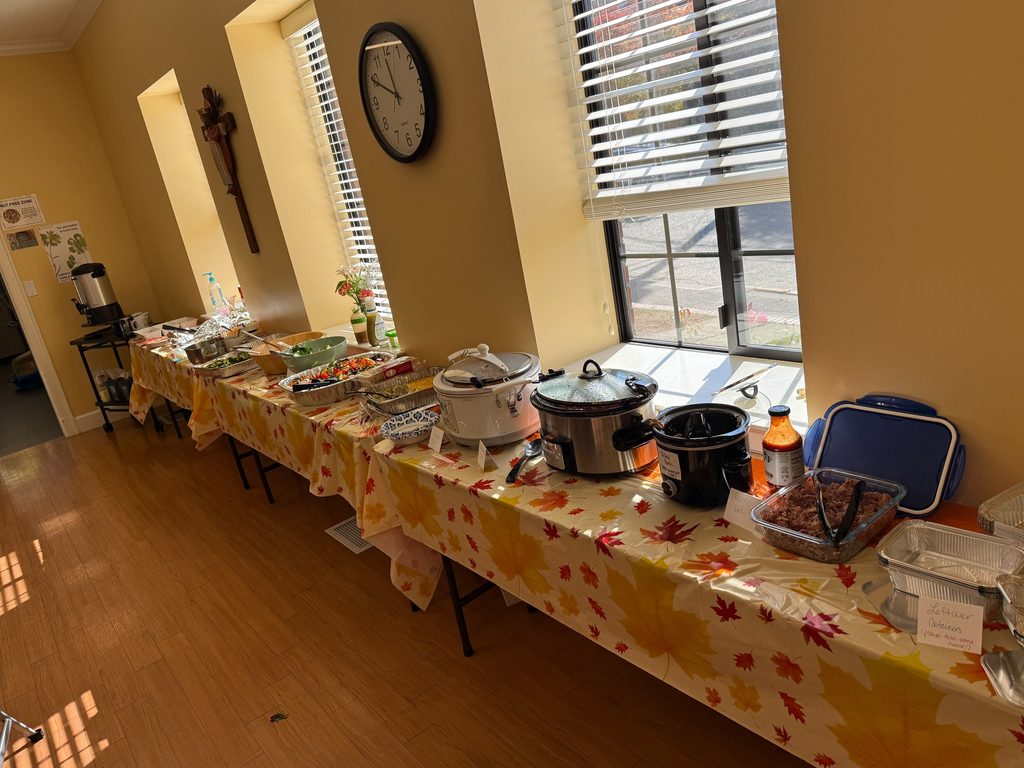
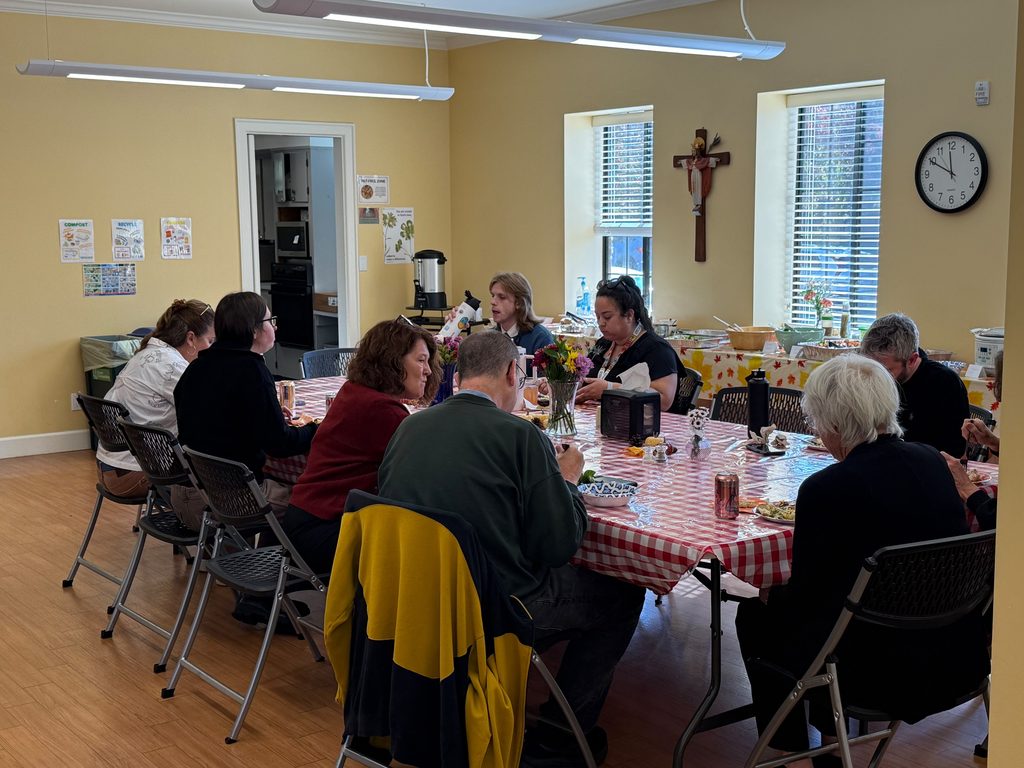

October Faculty Luncheon – Thank you 8th Grade!
-
9/24/26 Key Takeaways: ParentMap ADHD is Awesome Talk

In partnership with ParentMap, St John Catholic School hosted a Talk with Kim and Penn Holderness on Sept. 24, 2026
If you missed the live event, you can still watch the recording HERE
Resources
From Kim and Penn Holderness
• “ADHD Is Awesome: A Guide to (Mostly) Thriving With ADHD” — a resource to help you understand your own brain or that of someone you love
• “All You Can Be With ADHD” — a picture book for young readers
• “Get It Done and Have Fun: ADHD Hacks for Awesome Kids” — practical strategies written for kids • Follow the family on Instagram
Books and People Mentioned During the Event
• “Too Sensitive: Rejection, Resilience, and the Science of Feeling Deeply,” by Sasha Hamdani, M.D. — an accessible explanation of emotional sensitivity, with practical guidance for managing it. For many people with ADHD and other forms of neurodivergence, this sensitivity may be recognized as rejection sensitive dysphoria (RSD).
• “Getting to Calm: Cool-Headed Strategies for Parenting Tweens + Teens,” by Laura Kastner, Ph.D., and Jennifer Wyatt, Ph.D. — practical approaches to staying steady through the tween and teen years
• “The Calamity Club,” by Kathryn Stockett — the novel behind Penn’s failing-loud story (no time travel, but a great book)
More From ParentMap
• Related articles:
• The Holderness Family Is Changing the Way We Think About ADHD
• Kids Are Turning to Social Media for Answers on ADHD. Should They?
• Inside the ADHD Brain: Why Trying Harder Isn’t the Right Answer
• Coming up in October, our next ParentMap Talk, featuring Dr. Dana Suskind: Human Raised: Helping Kids Flourish in the Age of AI
• Register for the full ParentMap Talks season
What does it actually look like to work with an ADHD brain instead of constantly fighting against it? In our conversation with Kim and Penn Holderness, moderated by Dr. Laura Kastner, the bestselling authors and creators shared what they’ve learned from living with ADHD themselves, parenting kids with ADHD and figuring out what helps in everyday life.
Here are some of the ideas, strategies and resources worth coming back to. Thank you to Seattle Children’s for making this conversation possible.
5 Ideas We’re Still Thinking About
1. It’s not a deficit of attention. It’s an abundance of it.
The takeaway: Penn was blunt about it: “The name sucks.” ADHD brains take in more stimulus, not less, and the challenge is directing all that attention. The same wiring that makes a kid drift off in class is often where creativity, spontaneity and hyperfocus come from.
What this might look like in real life: A child who can’t get through a 10-minute math worksheet may spend three hours absorbed in building something. That’s not a willpower problem. It’s how interest driven attention works, and it helps to stop reading the inconsistency as proof they could do it “if they just tried.”
“It’s the same brain that everyone told me was holding me back when I was a kid.” — Penn Holderness
2. Starting is the hardest part.
The takeaway: For many people with ADHD, the ability to initiate a task is what breaks down, especially when there’s pressure to get it perfect. Kim described a delay in executive function: A child may genuinely not know how to begin a project that neurotypical peers can simply start. Breaking a task into “offensively small” steps, and lowering the bar for the first attempt, gets things moving.
Try this: Name the first four steps out loud: open the computer, open the class website, click your name, click the assignment. For a paper or project, try “do the worst version,” a strategy Kim uses on her own scripts and has worked through with her son. It works because it
takes perfectionism off the table. Kim said she often won’t start something
unless she knows it can be perfect. Deliberately aiming for bad removes
that barrier, and it’s a little funny, which takes the edge off. Once you’re in
motion, the hardest part is behind you, and editing a rough draft is far
easier than facing a blank page.
3. Connect first, then correct.
The takeaway: When a child seems not to be trying, Penn asked parents to
assume the opposite: an executive-functioning short circuit is happening,
and the task is taking far more effort than it looks. Correction is where the
shame comes from, and kids with ADHD can be paralyzed by shame. Connection doesn’t replace consequences. It comes first, so the child can actually hear what comes next.
For parents and educators: Try replacing “Why can’t you try harder?” with “I can see that you’re trying really hard. What can we do to make this less difficult?” Then build the plan together. Dr. Kastner noted that collaboration keeps it from feeling top-down, which kids naturally resist.
4. No system works forever.
The takeaway: Kim once hoped one picture checklist would carry her son through. Instead, the Post-it note on the kitchen cabinet worked until he stopped seeing it, and his phone alarms stopped registering too. ADHD brains respond to novelty, so reminder systems need refreshing. They also stick better when the child designs them.
Worth remembering: A routine is a living, breathing process, and changing it isn’t a sign it failed.
5. Big emotions are part of ADHD, even though the name leaves them out. The takeaway: Emotional dysregulation is often the main reason families end up at the doctor, yet it isn’t mentioned in the diagnosis. Penn described emotional regulation running a few years behind his peers. Kids also come home depleted after spending a full day in a school environment that wasn’t built for their brains, and that exhaustion can look like rudeness.
Try this: When a teacher described Kim’s son as “flooded,” the two of them turned it into visualizing a wave they could surf. When the feeling rises, picture riding the wave all the way in and breathe deeply until it comes back down. Dr. Kastner added the Jon Kabat-Zinn line: “You can’t stop the waves, but you can learn to surf.”
When Things Go Off the Rails
Kim, Penn and Dr. Kastner talked through some of the everyday situations that can be especially hard for people with ADHD. Here are a few strategies they suggested:
• For homework: Use a “first, then” order: first the work that needs doing, then the thing your child wants to do. Background music can help some kids tolerate “borture” (Penn’s word for boredom that feels like torture), though Penn finds it distracting for focused work.
• For mornings and getting out the door: Put things where they’re actually needed. The Holdernesses keep a toothbrush in the downstairs powder room, and Penn keeps a pair of shoes in the car.
• For organization and forgetting: Try a whiteboard and change it up every week with new pictures, jokes or colors so it keeps catching attention. Let your child write their own reminders; the Post-its in the Holderness kitchen were their son’s idea, not his parents’. • For the after-school transition: Give kids time to decompress before asking about their day. Kim realized her son wasn’t being rude or withdrawn when he said he was tired. He was fried from a full day of holding it together.
• For big emotions and back talk: Bring the temperature down first. “Let’s pause and come back to this” is a complete response in the moment. Dr. Kastner suggested parents model their own regulation out loud, whether that’s calm music, a walk or cold water on the face. • For sensory clashes at home: When one person needs quiet and another needs noise, say what you need rather than criticizing the other person. “This is what my body needs” lands better than “Why is your mouth so loud?” Noise-canceling headphones and separate rooms are fair game.
A Different Way to Look at ADHD
“It’s possible that the opposite of shame is laughter,” Penn said in the conversation. Shame stays quiet and inside. Laughing openly at your own mistakes means accepting them.
The Holdernesses practice what they call “failing loud.” Kim told the story of their water getting shut off because the city changed its billing system and she missed the letter. “I cried first,” she said, “and then I laughed.” Penn spent 150 pages of a novel set in 1930s Mississippi waiting for time travel, because he’d misheard Kim say the narrator “jumps around.”
They share these moments with their kids on purpose. Dr. Kastner explained why it matters: Kids tend to see their parents as close to perfect, and children with ADHD often read each mistake as proof that something is wrong with them. Hearing “you would not believe how much I blew it today” helps kids accept themselves a little more.
Penn floated an idea worth stealing: alongside a daily gratitude check-in, try a daily “what I screwed up today” chat.
More From the Conversation
Many of your questions came up during the talk and in the extended Q&A with Dr. Kastner afterward. Here’s what we heard on some of the most common ones.
• How ADHD can show up differently in girls: Kim was diagnosed with anxiety in college and with ADHD only years later. Looking back, the signs were there: outsized emotions, a report card that said “Kim struggles with transitions” and crying in the bathroom stall a few times a week. Girls are often socialized to internalize their struggles, so their diagnoses can be missed. • Getting a good assessment: ADHD can overlap with or be mistaken for anxiety, depression, autism or trauma. Everyone agreed that a thorough evaluation from a vetted professional matters more than an online screener, if a family has the resources. Dr. Kastner added that a good assessment is strengths-based.
• Talking to a reluctant teen about an assessment: Dr. Kastner suggested leading with what you see: “You’re struggling, and it doesn’t have to be this hard.” Invite their input, and let them know you can change course if it isn’t helpful.
• Weighing medication: Kim and Dr. Kastner both framed this as a personal family decision. Weigh the risks of trying medication against the risks of not trying it, including the toll on a child’s self-image. If you do try it, go slowly, and pair it with support and understanding rather than treating it as the whole answer.
• Supporting vs. rescuing: Penn shared that his mom did so much to keep him on track in high school that college was a shock. Dr. Kastner described scaffolding as supports you put up, then remove one at a time, putting them back only if needed.
• Rejection sensitivity: Kids with ADHD hear a steady stream of corrections all day. When a child says “everyone is against me,” don’t argue with their feelings. Acknowledge them, then steer toward something you know helps, like movement.
Questions to Keep Talking About
Whether you’re a parent, educator or both, consider coming back to these questions after the event:
• What’s one behavior you might interpret differently after hearing Kim and Penn? • Is there something you’ve been asking a child to do differently when the environment or approach may need to change instead?
• Where could you connect before you correct this week?
• Which reminder system in your home has quietly stopped working, and how could your child help redesign it?
• What strength in a child with ADHD might deserve more attention?
• What’s a mistake you could share with your kids, and laugh about, this week?
One Thing to Try
You don’t have to overhaul everything at once. Choose one idea from the conversation that made you think differently about your child or student, and try it this week.
If you need a place to start, take the advice that lit up the chat: Do the worst version. It’s going to be terrible, and that’s the point. Once you’re in motion, you can make it better.
-
ParentMap Talks are Back this Year!

-
9/4/26 PA Meeting

PA Updates
Welcome & Parent Association Overview (Liz & Stephanie)
Welcome to a new school year! The Parent Association is here to build community, support the school, and serve as a bridge between families and the administration. Stephanie Glassburn and Liz Le-Johnson will be your co-chairs for the 2026-2027 school year.
Every parent/guardian is automatically a member of the PA! There are many ways to get involved, meet other families, support the school, and earn volunteer hours. Getting involved in the PA is a great way to fulfill your Fair Share obligation.
Grade-Level PA Roles
Sign up today! Each grade needs two volunteers in each of the following roles:
PA Reps (Led by Stephanie Glassburn & Liz Le-Johnson)
- This role does not need to be classroom specific.
- Organize three grade-level events throughout the year.
- Take notes at monthly PA meetings.
- Volunteer for at least one PA-led event planning committee.
- Encourage others to volunteer.
- Serve as the point person between the PA and their grade-level team.
Room Parents (Led by Ciara Byars)
- Each classroom has one Room Parent.
- Send weekly communications via email, WhatsApp, etc.
- Collaborate with other grade-level PA volunteers.
- Serve as the primary point person for their classroom.
Hospitality Chairs (Aleah Valley & Dana Showers)
- Each classroom has one Hospitality Chair.
- Oversee teacher and staff gifts.
- Coordinate voluntary contributions for class events.
- Support Coffee & Donuts, the teacher/staff appreciation luncheon, and teacher birthdays.
- Initial grade-level communication will include information about upcoming birthdays; check the Google Doc for early September birthdays.
Classroom Auction Coordinators (Ainslie Clark & Courtney Blair)
- Each classroom has one Classroom Auction Coordinator.
- Serve as the main point of contact for Auction information.
- Coordinate the class Auction package.
- Facilitate the class Auction art project or appoint an Art Lead.
- Auction Information
- The Auction is a fully parent-led event and requires lots of support throughout the year.
- Auction: March 12 at Fremont Studios
- PK-5th Grade: Art Projects
- 6th Grade: Photo Booth
- 7th Grade: Wine Cellars
- 8th Grade: To be determined
Welcome Committee (Led by Jean Magbitang & Amanda Geismann)
- Summer playdates were a success and brought together many new and returning families.
- New families: Please find Jean if you have any feedback about your experience so far.
- Looking for additional Welcome Committee members. Contact Jean Magbitang if you’re interested.
- Next year’s Welcome Committee activities will kick off in the spring.
ParentMap ParentEd Talks
ParentMap will provide eight education talks throughout the year covering a broad range of topics.
- Upcoming: ADHD is Awesome: How to (Mostly) Thrive with ADHD with The Holderness Family
- Thursday, September 24, 12–1pm
- Register for free using promo code STJCATHSCH to receive webinar details.
- Register for the ParentMap series to receive information about upcoming talks.
- Promo code: STJCATHSCH
Website (Led by Gary Hurley)
Interested in helping with the PA website or graphic design? Please reach out to Parent_Association@st-johnschool.org.
- Look for updated PA information on our website.
Volunteer Recruitment
Current top two volunteer priorities:
- Back-to-School BBQ
- PA Grade-Level roles
- PA Reps
- Hospitality Chairs
- Classroom Auction Coordinators
School Garden (Led by Meggie Richards & Kate DeMotts)
- A WhatsApp group will be used to share garden needs and communicate with volunteers.
- Ideas are being explored for formalizing garden roles and creating more opportunities for families to get involved.
PA-Led & Supported Events
The PA organizes several annual community events, including:
- Back-to-School BBQ
- Spirit Day during Catholic Schools Week
- BINGO Night or Family Dance (alternating years)
- This year, we will host a Family Dance in the Spring
- Other parent and family events
The PA also supports many events led by other groups at school, including Endowment events, Grandparents Day, and general volunteer opportunities.
The PA also provides Parent Education opportunities throughout the year.
What to Expect from the Parent Association
- Monthly meetings: Meetings are held in person, with notes shared through class parents and posted on the PA website.
- Lots of volunteer opportunities: Many SUGs come through the PA. If you know of an opportunity or are looking for a way to get involved, reach out—we can help connect you!
- Leadership support: The PA Leadership Team will work directly with grade-level teams to provide support as needed.
- Community connection: The PA is one avenue for connecting families and parents with the school. We have a seat on the School Commission, work directly with the Admin team, and do our best to represent the collective ideas, interests, and needs of our community.
Upcoming Events
Back-to-School BBQ
Friday, September 11, 6–9pm on the St. John blacktop
- Activities for the kids
- DJ and dancing
- Volunteers still needed for:
- Playpit monitoring
- Food/grill
- Clean-up
Please check out the Activity Support volunteer opportunities if you can help!
Jog-a-Thon
Friday, September 18
The Jog-a-Thon is a fundraiser for all St. John students, Pre-K–8th grade. Students will run with their grades during designated times throughout the day.
- PK–3rd Grade: Upper Loop/blacktop
- 4th–8th Grade: Lower Loop/Egan Hall block
Goals:
- Raise $100,000 to support St. John School
- Run a combined 1,000 miles
- Volunteer! This is a fun and easy way to get in volunteer hours.
School & Class Incentives
- School goal: $100K → Free Dress + cash-grabbing Gecko for the entire school
- Top-selling grade: Silly String Showdown with the Principal and Vice Principal
- Top-donating class: The class with the most donations by noon on September 16 gets to choose the 2026 Jog-a-Thon theme song.
Individual Incentives
- Prize Raffle: $150 in donations by 9/11 and 9/16
- Springfree Trampoline Raffle: $200 in donations + an additional entry for every additional $100
- Top Mileage Runners: Additional recognition/prizes
Recess Monitors (Led by Malen Musgraves)
Volunteers are needed to monitor lunchtime recess rain or shine. Please consider signing up to help!
Admin Updates
2026–27 School Theme
This year’s theme is:
“We are rooted in God’s love, called to make a difference.”
School Families
School Families are back this year! Each of the 23 families will include students from Pre-K through 8th Grade.
This year, the school will also introduce the concept of siblings, pairing students from different grades—for example, 5th grade students will be paired with 2nd grade students.
New Staff
St. John has welcomed several great new hires this year, including:
- New XDC Director
- New Band Director
- New Middle School Drama Director
Lunchtray
A huge thank you to Jon Grover for designing and rolling out the new hot lunch ordering portal, Lunchtray.
Main Building Bathrooms
The facelift of the main building bathrooms is complete and looks great! Thank you to everyone who donated to last year’s Fund-A-Need to make this project possible.
Traffic & Drop-Off/Pick-Up
Please be mindful of traffic patterns during drop-off and pick-up and be respectful of neighborhood parking.
See the traffic patterns and map for more information.
-
The Family Tech Reset: Hope and Help for Rebuilding Connection

The St. John Parent Association, in partnership with ParentMap, provided an opportunity to hear Andrea Davis, educator and founder of Better Screen Time on May 12, 2026.
Link to this and all previous ParentEd videos: https://vimeo.com/showcase/parentedtalks-25-26
Access password: edTalks*2526
Key Takeaways:
“It’s never too early to start thinking about tech and never too late to backtrack.”
– Andrea Davis
“I reserve the right to be wiser today than I was yesterday.”
-Andrea Davis, when pulling back on anything (tech-related or otherwise) she previously permitted and changed her mind.
- Focus on developmental appropriateness: Technology evolves faster than research and regulations. The safest path for parents to take when introducing their kids to technology is a slow one. Consider your child’s developmental needs. Children still need the same foundations they always have: love, sleep, physical activity, learning, purpose, and good nutrition.
- Worry less by being intentional: Parents can reduce anxiety around technology by:
- Learning about the technology their children are using and the research surrounding it.
- Creating a Family Technology Plan that outlines expectations and evolves as children grow.
- Revisiting the plan regularly when new challenges arise.
- Model healthy technology habits: Children notice how adults use technology. Communicate openly about your own screen use so it feels purposeful rather than distracting. It is useful to “live your tech life outloud” by communicating to your kids what you are doing, how much time it will take, and what will come next when you complete a task. Example: “I am sending a work email right now. It will take me 5 minutes. When I am finished, you can help me make dinner and we will spend some time together.” Also consider applying household technology rules to yourself as well. If bedrooms are screen-free for children, think about whether adults can model the same expectation.
- Think carefully about early technology exposure: Technology is reaching children at younger ages, including through AI-powered toys. Before introducing new devices or products, consider what technology is being used and how it may shape your child’s experiences and relationships.
- Rethink screen time as a reward: Using screen time as a reward can unintentionally increase its perceived value and create more conflict around access. While it is reasonable to expect chores, homework, or responsibilities to be completed first, try not to position screens as the ultimate prize.
- Introduce technology gradually: The best way to introduce your child to technology is to do it slowly and based on their development.
- Think about your child’s emotional maturity and responsibility level. Bring your kids into the discussion to determine if they are ready. Use the “Am I Ready for a Personal Device?” assessment from Davis’ website.
- Avoid all or nothing thinking. Rather, use a smartphone stairstep approach, introducing the most basic technology first. Then, step up to the next level of technology based on need and developmental readiness.
- Similarly, social media should be introduced deliberately. Readiness varies widely from child to child.
- Avoid group texts/chats as first exposure: Group chats are often a child’s first exposure to digital communication, sometimes before they own a phone, and occurring in 4th or 5th grade. This can create problems at home and at school. Instead, introduce one-to-one texting or small conversations before large group chats.
- Pick the right device for the job: The variety of devices available provides parents with the opportunity to pick the right device based on the need and their child’s development.
- True brick phones offer talk/text but not group text or internet access. Example: Basic Nokia phone with SIM card and no data plan.
- Kid-focused smartphones with limits offer greater parental oversight built into the device. Examples: Pinwheel, Gabb phone, Bark phone
- Smartphones paired with third party apps offer some parental monitoring. Examples: iPhone, Android phones.
- Set clear boundaries and hold them: Kids will push back on boundaries; your job as a parent is to keep the boundary. Explain expectations during calm moments, including why a particular limit exists and how it supports their well-being. As children mature and demonstrate responsibility, boundaries can evolve.
- When problems arise, consider a reset: Sometimes families need to step back from technology they have already allowed. Common challenges involve social media, gaming, web browsing, and online sports content. If you need a tech reset, consider your child’s age (be more assertive with younger kids), your child’s temperament, and the relationship you have with your child. Rather than removing all technology at once, consider stepping back on level on the “stairstep.” When possible, offer a meaningful replacement. For example, if you take away Roblox, offer them a Mark Rober Build Box kit.
- Focus on the big picture: Conversations about technology should not only be about restrictions. Help children think about what they gain when they spend time on other activities—whether that is music, sports, creativity, friendships, service, or outdoor play. Talk openly about the persuasive and addictive design of technology, and invite your children into those conversations.
- Prioritize sleep: Healthy sleep is one of the most important protective factors for children and teens. Establish technology expectations that support consistent, high-quality sleep.
- Find support: Many parents feel pressure when it seems that other children have fewer technology limits. Building relationships with families who share similar values and expectations can provide encouragement and support. Consider hosting an event, surveying your friends, and talking about tech with people you meet. Technology challenges are easier to navigate when parents know they are not doing it alone.
Additional resources
Popular ParentMap articles:
- What’s Lost When Your Child’s Learning Is Outsourced to AI
- ‘The Opt-Out Family’: How One Family Chose Being Present Over Tech
- A Parent’s Age-by-Age Guide to Screen Time
Resources from speaker Andrea Davis:
-
Decoding Boys: Supporting Our Sons in Rapidly Changing World

The St. John Parent Association, in partnership with ParentMap, provided an opportunity to hear Dr. Cara Natterson, pediatrician and bestselling author, speaks on April 22, 2026.
Link to this and all previous ParentEd videos: https://vimeo.com/showcase/parentedtalks-25-26
Access password: edTalks*2526
Key Takeaways:
- Prioritize Open Conversations: There is an urgent need to empower boys through the same level of open conversation recently focused on girls to address concerning trends in their self-image, mental well-being, and academics.
- Recognize Early Puberty and Behavioral Signs: Puberty is starting earlier for boys, typically around ages 9-10, and parents should be aware that mood swings during this time. Boy puberty is often manifested as intense rage, but also as withdrawal into silence, which is overlooked.
- Take an Active Role in Sexual Health Education: With the average age of first pornography exposure at 12, parents must overcome their own awkwardness to become primary educators on healthy relationships and safe digital habits.
- Utilize Connection Strategies: To avoid triggering shutdowns, parents should use “side-by-side” positioning (like talking in the car), or while giving a foot-rub before bed time – as face-to-face engagement can feel too intense. Parents can also engage by learning to like their teen’s hobbies like video games. Using humor especially if you are the “butt of the joke” is helpful in building vulnerability.
- Focus on Individual Strengths and Mentors: For boys struggling in traditional school settings or with social withdrawal, parents should be relentless in finding outside areas such as clubs or hobbies or even starting a small business where their specific temperaments and strengths can blossom.
Additional resources
ParentMap
Join the ParentMap community for expert parenting tips and tools to support your journey.- ParentMap website
- Follow us: Instagram | Facebook
Popular ParentMap articles:
- How Toxic Versions of Masculinity Harm Boys
- ‘Grown Up Dad’ Isn’t Just a Much-Needed Docuseries. It’s a Movement
- How Do We Teach Boys About Consent?
Resources from speaker Dr. Cara Natterson:
-
ParentEd Wine Down 🍷
ParentEd Wine Down – April 30th at 6:30 PM in Egan Hall
Join us at the PA-hosted ParentEd Wine Down event. We will highlight three of the speakers from this year’s ParentMap talks focused on Social Emotional Learning and Educational Technology (no need to watch in advance). We’ll share clips from the talks then will break up into small groups for a guided discussion.
If you’re interested in learning more about the ParentMap talks in advance, links to the PA website with information on the key points and links to videos are below.
- Social Emotional Learning
- Educational Technology
Please consider joining us to connect with other St. John families while exploring practical ways to support your child’s growth and success.
If you’re interested in joining, please RSVP here to help us with setup plans. RSVP not required to join.
-
3/20/26 PA Meeting

PA Updates
Bingo Night (Maile & Stephanie)
- Bingo tickets are currently on sale as a “Grown Up Sign-Up Party” through the Online Auction bidding site.
- Kick‑off planning meeting: Wednesday, March 25 at 8:30am in the Parish Admin Building.
PA Meetings
- Only two PA meetings left for the year!
- Looking for note takers for the final two meetings—please sign up if your grade has not yet participated.
Auction Updates (Ainslie & Courtney)
- Auction is one week away!
- Online Auction
- Opens Sunday, March 22 at 12pm
- Closes Thursday, March 26 at 10pm (earlier close time is new this year)
- Volunteer needs remain—please help fill open slots.
- Dessert Dash:
- Need approximately 13 more desserts.
- Volunteers need to place and pay for the order; and pick up and deliver.
- A list of bakeries is available, or choose your own.
- Christmas Trees:
- Donations still needed. Goal: 20 trees. Trees will be returned following the auction.
- Auction team can coordinate pickup.
- Kids Art:
- Great items this year! Includes chess boards, giant Connect Four, textured art.
- All items will be included in the silent auction (none will go to live).
- Raffle Tickets:
- Families must return all sold and unsold tickets.
- Return by Friday for Free Dress.
- Fund‑A‑Need:
- Goal: $100K to fund main building bathroom refresh.
- Includes new acoustic ceilings, paint, redesigned stalls for privacy, and mirrors.
- Project planned for June–August, pending fundraising success.
Overall Auction Goal: Over $350K, as in past years.


Welcome Committee (Jean)
- First committee meeting held March 19.
- Very positive feedback on current onboarding experience.
- Buddy Family Program is top priority; sign-up link is live and will be included in classroom emails.
- Greatest volunteer need: Pre‑K and K buddy families.
- Welcome Happy Hour: May 21
- Summer Playdate Schedule:
- June 20
- July 11
- July 25
- August 8
- Planning a Buddy Family training session to clarify roles and provide resources.
Parent Map (Alev & Reagan)
- March Talk: The EdTech Wake-Up Call
- Recording and key takeaways are available on the PA website.
- April Event:
- The Boyhood Crisis with Richard Reeves
- April 22, 12–1pm (Zoom; registration required)
- Save the Date:
- Thursday, April 30, 6:30–8:30pm
- Community Parent Ed evening event
- Details forthcoming.
Volunteer Recruitment (Lauren)
Continuing to address volunteer shortages. Exploring partnership with the Parish to help recruit more families—especially those declaring in‑parish tuition rates. Planning a Volunteer Fair at the Fall Curriculum Night, similar to the Catholic Schools Week model. Aim is to reduce barriers and make volunteering easier to navigate.School Garden (Meggie & Kate)
- Following February’s successful cleanup, students are returning to the garden.
- Recent & Upcoming Activities:
- March 19: 6th graders planted blueberry bushes donated by Swanson’s Nursery.
- March 26: Kindergarteners will plant snap peas.
- Week of March 30: Goal to bring 2nd graders to make daffodil bouquets (TBD).
- Will reach out to room parents as volunteer needs arise.
- Planning to restart Grow Together Day (Wednesdays or Thursdays after school, 3–4pm).
- Garden community updates shared via their private FB page:
https://www.facebook.com/share/g/1X877x6p8s/?mibextid=wwXIfr
More information about summer garden support opportunities will be provided next month.
-
The EdTech Wake-up Call: Rethinking Digital Learning for Kids

The St. John Parent Association, in partnership with ParentMap, provided an opportunity to hear Jared Cooney Horvath, Ph.D.- director of LME Global – speak on March 10, 2026.
Link to this and all previous ParentEd videos: https://vimeo.com/showcase/parentedtalks-25-26
Access password: edTalks*2526
Key Takeaways:
The “Inverse Correlation” Rule: Both international (PISA/TIMS) and US data (NAPE) show a direct correlation between increased classroom technology and dropping test scores. High-tech usage is linked to a performance gap of up to two grade levels compared to analog-heavy schooling, as technology often introduces a plateau in reading and math skills.
The Empathy & Resonance Factor: Humans are biologically “wired” to learn through empathy. In-person learning allows for a “transpersonal resonance” where a teacher and student’s physiologies—including breathing and brain patterns—synchronize. This biological connection helps students push through the “struggle” of learning; technology cannot replicate this, contributing to high dropout rates in online-only environments.
The “Home Analog” Pivot (Buy a Printer): One of the most immediate strategies for parents is to buy a printer. Because the brain uses spatial memory (remembering exactly where a word was on a static piece of paper), reading on a shifting digital screen essentially “dumps” an entire memory system. Printing out homework and readings restores this 3D location-based learning.
AI as an “Expert Tool,” Not a “Learning Tool”: AI is primarily a productivity tool for experts who already have the foundational knowledge to vet its output. For a novice student, offloading cognitive effort to AI reduces the mental “struggle” necessary to wire the brain’s neural connections. True expertise is built through “desirable difficulty,” which AI often bypasses.
The 50-Minute “Deep Work” Strategy: To combat multitasking—which forces the brain into an automatic “muscle memory” mode rather than deep recall—parents can suggest a deal: Two 25-minute sessions of focused, offline study with a short break. This 50 minutes of focused work results in up to 60% better retention than four hours of multitasking.
Handwriting as “Thinking”: Unlike typing, which is fast and often leads to verbatim transcription without processing, handwriting is a slower, deliberate act of composition. It forces the brain to process meaning and depth while writing, leading to more “durable” and transferable knowledge.
The Power of Parental Advocacy: In an increasingly digital landscape, parents play a vital role in ensuring a balanced approach to education. By requesting objective data on student performance and advocating for the continued use of proven analog methods, parents can help schools maintain a focus on the deep, focused thinking that traditional tools provide.
Additional resources
ParentMap
Join the ParentMap community for expert parenting tips and tools to support your journey.- ParentMap website
- Follow us: Instagram | Facebook
Popular ParentMap articles:
- Seven Ways to Boost Brain Development
- Strategies to Help Learning-Resistant Students Achieve
- Gamification in the Classroom
Resources from speaker Jared Cooney Horvath, Ph.D.: